No More Tears: Skip Hop Moby Rinser
For many parents, the transition from the "sink bath" stage to the full-sized tub is a major milestone. However, it often comes with an unexpected hurdle: the sudden, visceral fear of water on the face. What begins as a soothing ritual can quickly devolve into a nightly battle of wills, characterized by high-pitched screams and a frantic scramble to escape the tub.
As a pediatric specialist, I often see parents who are exhausted by this "bath time battle." The core of the issue is rarely a dislike of water itself, but rather a sensory-driven fear of the unpredictable. When water and soap accidentally enter a child’s eyes or nose, it triggers a powerful defensive reflex. To help parents navigate this common developmental phase, we are taking a deep dive into a tool that has become a staple in modern nurseries: the Skip Hop Moby Rinser.
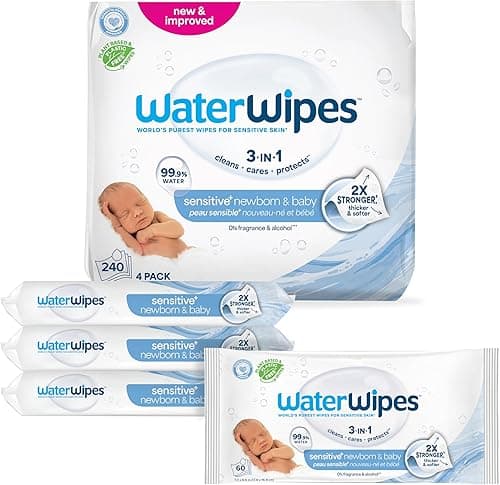
WaterWipes Original Baby Wipes, 99.9% Water, Unscented & Hypoallergenic
Clean those precious rolls with zero drama using the world's purest baby wipes. Featuring just two ingredients, these plant-based wipes are basically a cheat code for avoiding diaper rash while staying eco-friendly. It’s the peace of mind you need for your little one’s sensitive skin, wrapped in a plastic-free package.
The Science of Bath Time Aversion
To understand why a simple cup can be a game-changer, we must first understand the pediatric physiology of a toddler. Infants and young children have a highly sensitive "corneal reflex." When even a small amount of water or mild surfactant (soap) hits the eye, the body’s immediate response is to shut the lids and pull away.
Furthermore, for a toddler, the sensation of water rushing over their face can feel like a loss of control. In developmental psychology, this is often linked to sensory processing. A child’s brain is still learning how to filter environmental stimuli. The sudden "flood" of water over the eyes and nose can be over-stimulating, leading to a fight-or-flight response.
This is where the Skip Hop Moby Rinser intervenes. By controlling the flow and direction of the water, we remove the "threat" of the unknown. We are not just washing hair; we are preserving the child’s sense of safety and bodily autonomy.
Deep Dive: The Skip Hop Moby Rinser
At first glance, the Moby Rinser looks like a charming, whale-shaped pitcher. However, its design is rooted in ergonomic functionality.
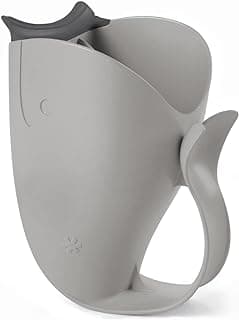
Skip Hop Moby Bath Rinse Cup
Tear-Free Bathing Fun: Specially designed with patented interior ridges, our MOBY rinser channels a steady, even flow of water to keep it away from your baby’s eyes and ears, ensuring a quick rinse every time. No more tears or fuss during bath time
The "Magic" of the Soft Rubber Lip
The standout feature—and the reason this product has gained a cult following among parents—is the flexible rubber lip. Unlike a standard plastic cup or a handheld showerhead, the Moby Rinser features a soft, parabolic curve at the edge.
When you press this rubber lip against your child's forehead, it contours to the shape of their skull. This creates a temporary, watertight seal. As you pour, the water is forced to travel backward over the crown of the head, completely bypassing the eyes and ears. This physical barrier is the key to stopping the "soap in the eyes" cycle that causes so much bath time anxiety.
Interior Ridges for Controlled Flow
A common mistake parents make is using a large volume of water all at once, which can overwhelm the child. The Moby Rinser features patented interior ridges. These fins act as flow-stabilizers, ensuring that the water pours out in a steady, even stream rather than a chaotic splash. This controlled delivery allows for a more thorough rinse of the scalp while using less water, which is particularly helpful when trying to rinse out thick conditioners or stubborn cradle cap treatments.
Key Specifications and Maintenance
While functionality is paramount, pediatricians and gear experts also look for safety and hygiene.
- Material Integrity: The Moby Rinser is made from BPA-free, Phthalate-free, and PVC-free plastic. This is vital, as children often treat bath toys as teething rings.
- Ergonomic Handle: The handle is designed to be easy for a parent to grip even with soapy hands, reducing the risk of dropping the pitcher on a slippery toddler.
- Hygiene and Mold Prevention: One of the biggest complaints in the bath toy industry is mold. The Moby Rinser is designed to stand upright on its base or hang by its "tail" on a hook. This allows for air circulation.
- Expert Tip: Even with mold-resistant materials, moisture in a bathroom is a constant. I recommend a quick wipe-down with a diluted vinegar solution once a week and ensuring the rinser is placed in a well-ventilated area—not left floating in the tub water overnight.
Parent-to-Parent: Tips for a Tear-Free Transition
Simply buying the "whale cup" is the first step, but how you introduce it matters. Here is a strategy for parents dealing with severe bath-time resistance:
1. The "Dry Run" Introduction
Introduce the Moby Rinser outside of the bathtub first. Let your child play with it in the living room or during "dry play." Allow them to feel the soft rubber lip. By turning the tool into a familiar toy, you strip away its "scary" potential before it ever touches water.
2. The "Lean Back" Technique
Encourage your child to "look at the stickers on the ceiling" or "look for the stars." When their head is tilted back, the Moby Rinser’s seal becomes even more effective. If they struggle with this, you can place a colorful decal on the ceiling above the tub to give them a visual target.
3. Empowerment Through Participation
As the "Real Parent Review" noted, many toddlers find comfort in control. Once your child is comfortable with you using the rinser, let them try it. Let them pour water over their own legs or chest, then gradually move to their shoulders. Relinquishing a bit of control can significantly lower their cortisol levels during the process.
Expert Tip: Recognizing Sensory Overload
As a specialist, I encourage parents to observe how their child reacts. There is a difference between a typical developmental fear of water and a sensory processing sensitivity.
When to call the doctor or a pediatric occupational therapist:
- If your child has an extreme, inconsolable reaction to any water touching their skin (not just their face).
- If they seem unable to recover for hours after bath time.
- If they have significant difficulty with other "grooming" tasks like hair brushing, nail clipping, or wearing certain clothing textures.
For most children, however, the fear is simply a result of a few bad experiences with soap in the eyes. In these cases, a high-quality product like the Skip Hop Moby Rinser acts as a "reset button" for their expectations.
Why High-Quality Products Matter
In the world of parenting, it is tempting to think that "a cup is a cup." However, the difference between a standard kitchen mug and a purpose-built rinser is the difference between an accidental splash and a precise rinse. High-quality products are designed with the specific anatomy of a child in mind. They consider the grip of a wet hand, the curve of a toddler's forehead, and the chemical safety of the materials. Investing in tools that solve a specific pain point can reduce the overall stress level of the household, leading to better sleep and better bonding.
The Verdict: A Small Price for Peace
At a price point usually under $10, the Skip Hop Moby Rinser is one of the most cost-effective investments a parent can make. It solves a universal problem with an elegant, simple design.
By preventing the "sting" of soap and the "shock" of cold water on the face, you are doing more than just cleaning your child; you are building their confidence in the water. Bath time should be a period of sensory exploration and relaxation—a bridge between the chaos of the day and the calm of bedtime. With the right tools and a little patience, you can turn those screams into giggles.
Final Thought: If you are currently in the thick of the "bath time wars," remember that this is a phase. Use the whale, stay consistent, and keep the bubbles flowing. You’ve got this.