The Teether That Actually Works: Comotomo
Teething is often described as a rite of passage for both infants and parents, but for those in the thick of it, "rite of passage" feels like a polite euphemism for sleepless nights, endless drool, and a very frustrated baby. As a pediatric specialist, I have seen countless parents cycle through dozens of gadgets, rings, and chilled cloths, searching for that one elusive tool that provides genuine relief.
The reality of infant development is that chewing isn't just a response to pain; it is a critical sensory exploration. Between the ages of three and seven months, babies begin to discover the world through their mouths. This oral-motor stage is foundational for later speech development and solid food transitions. However, when the first primary teeth—usually the lower central incisors—begin to push through the sensitive gingival tissue, this exploration becomes a necessity for pain management.
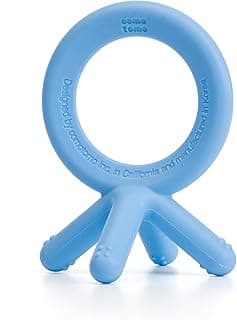
Enter the Comotomo Silicone Teether. While it may look simple, its design is rooted in an understanding of infant anatomy and instinctive behavior. It addresses the "why" behind the cry, making it one of the few products that consistently earns its place in a parent’s "survival kit."
The Science of Why Babies Chew on Their Fingers
If you observe a teething infant, their first instinct isn’t to grab a plastic ring; it’s to shove their own fingers (or yours) into their mouths. From a developmental perspective, this makes perfect sense. Fingers provide the right amount of resistance, they are easy to navigate within the small oral cavity, and they offer a familiar sensory "map" of the mouth.
Comotomo’s design philosophy leverages this biological instinct. By creating a teether with four prongs that mimic the size and shape of baby fingers, they have created a tool that feels intuitive to the infant. Unlike bulky, circular teething rings that can be difficult for a four-month-old to manipulate, the Comotomo prongs allow for targeted pressure.
Expert Tip: Chewing provides "proprioceptive input" to the jaw. This deep pressure helps calm the nervous system, which is why a teething baby often seems "frantic" until they find something firm to bite down on.
Engineering the "Perfect Reach": Beyond the Front Teeth
One of the most significant challenges with standard teethers is their inability to reach the back of the mouth. While the front teeth (incisors) usually erupt first, the gum swelling and discomfort often extend toward the back where the molars will eventually emerge.
The Comotomo teether is specifically engineered to reach these back molars without triggering the gag reflex. This is a crucial distinction. Many teething toys are either too short to reach the back or so bulky that they cause the baby to gag, leading to more distress. The slender, finger-like prongs of the Comotomo allow an infant to explore the posterior regions of their gums safely.
Ergonomics for Tiny Hands
At this stage of development, fine motor skills are still "under construction." A baby’s "palmar grasp" (using the whole hand to wrap around an object) is much stronger than their finger dexterity. The Comotomo’s circular base is perfectly sized for these small hands to clench, providing the leverage they need to guide the prongs exactly where the pain is most acute.
Material Matters: Why Medical-Grade Silicone is the Gold Standard
In the world of baby products, quality isn't just a luxury—it's a safety requirement. We recommend that parents prioritize high-quality, non-toxic materials for anything that spends hours inside a child’s mouth.
The Comotomo teether is constructed from 100% Medical Grade Silicone. But what does that actually mean for your baby?
- Non-Toxic Composition: It is naturally free from BPA, PVC, and Phthalates. Unlike some cheaper plastic teethers, there are no concerns about chemical leaching.
- Heat Resistance: Medical-grade silicone can withstand extreme temperatures. This allows for superior sterilization (which we will discuss below).
- Durability: Unlike liquid-filled teethers, there is no risk of a "leak" or a puncture that could swallow a baby in mysterious fluids. It is a solid, one-piece construction, which is the safest design for preventing choking hazards.
Hygiene and Maintenance: A Parent’s Practical Guide
One of the most overlooked aspects of teething toys is how quickly they can become breeding grounds for bacteria. Drool, milk residue, and household dust create a "biofilm" on toys.
The Comotomo teether’s one-piece design is a massive advantage here. There are no cracks, seams, or valves where mold can hide.
Cleaning Protocols
- The Daily Rinse: For everyday use, warm soapy water is sufficient.
- The Deep Clean: Because it is silicone, you can toss it in the top rack of the dishwasher.
- The Sterilization: For peace of mind, especially after a bout of the common cold, you can boil the teether in water for five minutes. It won't warp or degrade.
Parent-to-Parent Tip: Buy more than one. These teethers are small and, because babies love them, they tend to get dropped in car seats, grocery store aisles, and behind the couch. Having a "rotation" ensures you always have a clean one ready when the "teething emergency" strikes.
The Teething Timeline: When to Use the Comotomo
While every baby is different, the "standard" teething timeline can help you prepare:
- 4–7 Months: The first teeth (usually bottom front) appear. This is when the Comotomo is most useful for soothing focused pain.
- 8–12 Months: The upper front teeth emerge.
- 13–19 Months: The first molars arrive. This is where the long prongs of the Comotomo really shine, as they can reach the very back of the gum line where wider rings cannot.
Expert Insight: Teething vs. Illness
As a pediatric specialist, I frequently hear from parents who believe their child has a "teething fever." It is a common myth that teething causes high fevers.
When to Call the Doctor:
- Temperature over 101°F (38.3°C): This is likely a viral infection, not teething.
- Diarrhea or Vomiting: These are not standard teething symptoms.
- Extremity Rashes: While a "drool rash" around the chin is common, rashes on the body are not related to teething.
- Inconsolable Crying: If a high-quality teether and physical comfort don't soothe the baby at all, there may be an ear infection or other issue at play.
Expert Tip: If your baby seems particularly inflamed, try putting the Comotomo teether in the refrigerator (not the freezer) for 20 minutes. The cold silicone provides a mild anesthetic effect to the gums, reducing inflammation safely.
Real-World Feedback: The Parent’s Verdict
The consensus among the parenting community is clear: simplicity wins. One parent shared, "My son refused every other teether. He gnawed on this thing for 4 months straight. It was the only thing he could actually get to the spot that hurt."
This sentiment is echoed by thousands. The reason it works isn't because of flashing lights or fancy textures; it’s because it respects the baby’s natural anatomy.
Final Summary
At a price point typically under $10, the Comotomo Silicone Teether is perhaps the most cost-effective investment you can make in your child’s comfort during their first year. It is:
- Safe: 100% Medical-grade silicone and non-choking design.
- Effective: Mimics fingers to reach back molars and soothe gums.
- Hygienic: Easy to boil and dishwasher safe.
When your baby is screaming at 2:00 AM because a lateral incisor is making its debut, you don't want a complicated toy. You want the teether that actually works. The Comotomo is, quite simply, that tool.