Purple Monkey Dishwasher: The Piano Gym Cult
If you have spent any time in a parenting forum, a local playground, or scrolling through "parent-tok," you have likely heard the legend of the Purple Monkey. To the uninitiated, "Purple Monkey Dishwasher" sounds like a surrealist fever dream. To the initiated, it is the anthem of a generation—a specific, high-energy song from the Fisher-Price Kick & Play Piano Gym that has achieved a level of cult-like devotion rarely seen in the world of plastic infant gear.
But why has this particular gym become the gold standard for pediatric development and parental survival? As experts in early childhood growth, we look beyond the catchy earworms to understand how this toy serves as a powerhouse for physical and cognitive milestones.
The Science of Play: More Than Just Kicking
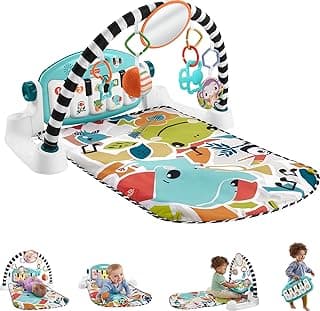
At first glance, the Piano Gym is a colorful mat with a keyboard at one end and a toy arch above. However, from a developmental perspective, it is a sophisticated "cause-and-effect" laboratory. When a baby kicks their legs and hears a musical note or a lyric about a "stomp, stomp, stomp," they are experiencing a breakthrough in cognitive mapping.
Proprioception and Cause-and-Effect
In the first few months of life, infants are discovering that their limbs actually belong to them. This is known as proprioception—the sense of self-movement and body position. When a baby’s foot accidentally strikes a piano key, the immediate feedback of a bright light and a boisterous song creates a neural pathway.
This is the birth of intentionality. The baby thinks, “I moved my foot, and that sound happened. If I do it again, will it happen again?” This simple loop is the foundation of scientific inquiry and logical reasoning.
Gross Motor Mastery
The "Kick & Play" design is specifically engineered to strengthen the large muscle groups.
- The Extensor Muscles: Frequent kicking strengthens the legs and glutes, preparing the infant for the eventual milestones of rolling and crawling.
- Core Stability: As babies reach for the hanging toys on the arch, they engage their abdominal muscles. This "cross-body" reaching is essential for bilateral integration—the ability to use both sides of the body in a coordinated way.
A Four-Stage Developmental Roadmap
One reason we emphasize the importance of high-quality, versatile products like this is longevity. Many infant toys have a "shelf life" of about three months. A well-engineered activity gym, however, evolves alongside your child.
1. Sense (0–3 Months): Lay and Play
In the earliest stage, the gym provides high-contrast visual stimulation. Newborns have limited color vision, and the bright, primary colors of the piano keys provide the necessary "visual weight" to help them learn to focus their gaze. The overhead arch encourages "batting" at toys, which is the precursor to grasping.
2. Discover (3–6 Months): Tummy Time
Tummy time is non-negotiable for preventing positional plagiocephaly (flat head syndrome) and building the neck and shoulder strength required for sitting up. However, many babies find tummy time frustrating. The Piano Gym acts as a distraction. By tilting the piano keyboard flat, the baby can press the keys with their hands while on their stomach, turning a "workout" into a multi-sensory experience.
3. Explore (6–9 Months): Sit and Play
Once your baby has achieved independent sitting, the piano can be pivoted upwards. This encourages the baby to use their fine motor skills to press individual buttons rather than just "stomping" with their feet. It also challenges their balance as they reach forward and side-to-side while seated.
4. Create (9–36 Months): Take-Along
High-quality developmental toys shouldn't be discarded once a child walks. The piano component of the gym is often detachable, allowing toddlers to carry their "instrument" around, fostering an early interest in rhythm and musicality.
Parent-to-Parent: Tips for the "Cult" Life
While the developmental benefits are clear, living with the Piano Gym requires a bit of practical strategy. Here is how to maximize the experience without losing your mind:
- Rotate the Hanging Toys: The gym usually comes with a set of plastic animals (the "clackers"). To keep your baby engaged, swap these out for high-contrast cards, soft fabric mirrors, or different textured rings. Novelty is a powerful driver for infant brain engagement.
- The "Volume Switch" is Your Friend: Most high-quality electronic toys feature two volume settings. Use the lower setting for quiet morning play and save the "high" setting for when you need ten minutes of uninterrupted time to drink a cup of coffee.
- Cleanliness Matters: Babies are messy. When choosing an activity gym, ensure the mat is machine-washable. For the plastic components, a simple wipe-down with a baby-safe sanitizer is enough to keep the "Purple Monkey" from becoming a germ factory.
Expert Tip: When to Call the Pediatrician
While every baby develops at their own pace, the Piano Gym can actually serve as a helpful screening tool for parents.
Watch for these signs during play:
- Hand Preference: If you notice your baby only reaches with their right hand or only kicks with their left leg over a period of several weeks, mention it to your pediatrician. In the first few months, babies should be relatively symmetrical in their movements.
- Lack of Tracking: By 3 months, your baby should be able to follow one of the hanging toys with their eyes as you move the arch.
- No "Startle" to Sound: If the loud music of the piano doesn't seem to elicit any reaction from your baby, it may be worth requesting a hearing screening.
Note: These are general observations and not a diagnosis. Always consult with a medical professional regarding your child's specific milestones.
The "Purple Monkey" Phenomenon: Why the Music Hits Different
We cannot discuss this gym without addressing the music. Most "toy music" is tinny, repetitive, and grating. Fisher-Price took a different route, hiring actual songwriters to create tracks that sound like genuine indie-pop or folk songs.
The lyrics of the "Purple Monkey" song—and its companion, "Maybe"—deal with themes of unconditional love and exploration. While the baby loves the upbeat tempo (which mimics a resting heart rate of about 120-140 BPM, common in infants), parents often find themselves unironically moved by the lyrics.
In a season of life characterized by sleep deprivation and "dirty diaper" marathons, these songs become the soundtrack to your bonding. This emotional resonance is a hallmark of a well-designed product; it considers the experience of the caregiver just as much as the child.
The Verdict: Is It Worth the Hype?
As experts, we often tell parents that "less is more." You do not need a house full of plastic to raise a genius. However, if you are going to invest in one "busy" toy, the Kick & Play Piano Gym is the unanimous choice.
It fulfills the three pillars of a great developmental toy:
- Versatility: It grows with the child.
- Feedback: It provides immediate reinforcement for physical effort.
- Engagement: It captures the infant's attention long enough for the parent to take a breath.
You will, without a doubt, find yourself humming the songs in the shower. You will eventually want to hide the batteries. But when you see your baby’s face light up as they realize they made that music happen, you’ll understand why the "cult" exists.
Buy the gym. Learn the songs. Welcome to the club.