Social Development: From the First Smile to Separation Anxiety
We focus so much on physical milestones (rolling, walking). But what about the milestones of the heart? Social-emotional development is the foundation of your child's personality, empathy, and ability to handle stress.
Month 1-2: The Social Smile
For the first few weeks, smiles are gas. Sorry. BUT, around 6-8 weeks, the world changes. You smile, and they smile back. This is the Social Smile. It is their first intentional communication that says "I like you." It is nature's way of rewarding parents for the sleepless nights.
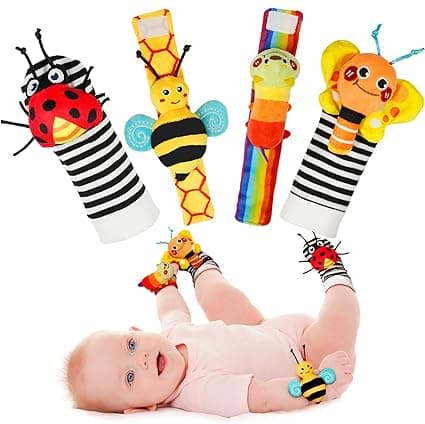
Infinno Baby Wrist Rattle Socks and Foot Finder Set, Perfect Baby Toys for 0-12 Months Newborn Boys and Girls As Shower Gifts, Garden Bug Series
PROMOTE SENSORY EXPLORATION - The bright colorful rattle socks will promote baby sensory exploration through sight, touch and sound. Baby boys and girls will be encouraged to grab and reach the bright colorful wrist rattles and foot finders.
Month 4: The Giggle
They start to understand the rhythm of conversation. You make a funny noise. They laugh. You do it again. This is the beginning of humor and anticipation.
Month 6: Recognition
They are starting to distinguish "My People" from "Other People." They might calm down instantly when you hold them, but keep crying when Grandma holds them. This isn't being "spoiled." It's attachment. They know who keeps them safe.
Month 9: Object Permanence & Separation Anxiety
This is a tough one. Suddenly, when you leave the room to pee, they scream like you are being eaten by wolves. Why? Object Permanence. They now understand that you exist even when you aren't there, and they miss you.
- Tip: Play Peek-a-Boo. It teaches them "I disappear, but I always come back."
- Tip: Always say goodbye. Don't sneak out. "I am going to the store. I will be back." It builds trust.
Month 12: Joint Attention
You point at a plane in the sky. They look at your finger, then look at the plane, then look back at you to see if you saw it too. This triangle (You-Baby-Object) is Joint Attention. It is a massive cognitive leap. It means they know that you both are sharing an experience.
"Stranger Danger"
Around 8-10 months, a previously friendly baby might freak out when a stranger says hi. This is a survival instinct. They are becoming mobile, so nature programs them to stay close to their protectors.
- Advice: Don't force them to hug Uncle Bob. Let them warm up on their own terms. Respect their bodily autonomy.
Supporting Their Feelings
Babies have big feelings in tiny bodies. They don't have the prefrontal cortex to "calm down." When they cry:
- Validate: "You are sad I took the remote away."
- Co-Regulate: Lend them your calm. Hold them. Breathe deep. They will sync to your nervous system.
Conclusion
You are their mirror. If you react with fear, they will be scared. If you react with joy, they will be happy. Model the emotional regulation you want them to have (eventually).