The Chair for Life: Is the Stokke Tripp Trapp Worth $300?
The Unseen Value: Why a High-Quality High Chair is More Than Just a Seat
Parenting is a journey filled with choices, and few decisions feel as weighty as those concerning our children's well-being and development. From their first breath to their first steps, we strive to provide the best foundation. When it comes to mealtimes, a seemingly simple piece of furniture – the high chair – plays a far more significant role than many realize.
For years, the market has been flooded with high chairs that, while serving a basic function, often fall short on aesthetics, practicality, and, most importantly, ergonomic support. They can be bulky, challenging to clean, and quickly outgrown, destined for the landfill long before their time. But what if a high chair could be different? What if it could be an investment, a piece of thoughtful design that supports your child's development, integrates seamlessly into your home, and lasts a lifetime?
Enter the Stokke Tripp Trapp. Designed in 1972 by Norwegian furniture designer Peter Opsvik, the Tripp Trapp revolutionized the concept of a child's chair. Its core philosophy was radical yet profoundly simple: bring the child to the dining table, at the same height as the adults, fostering connection and participation from an early age. This isn't just about a seat; it's about integrating your child into the heart of family life and nurturing their growth in a way that typical high chairs simply can't.
In a world brimming with fleeting trends, choosing high-quality, durable, and thoughtfully designed products for our children is paramount. They often represent not just a purchase, but an investment in health, development, and sustainability.
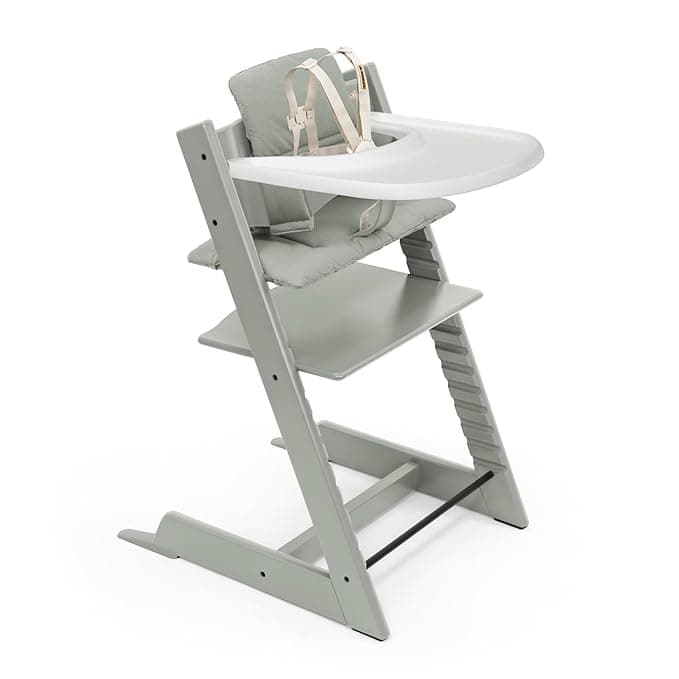
Stokke Tripp Trapp High Chair
HIGH CHAIR - The Tripp Trapp High Chair 2 was designed to bring baby right up to the table, where they can learn & develop alongside the rest of the family. It includes the Tripp Trapp Chair and the Baby Set 2, which is best for ages 6-36 months.
The Science of Sitting: Why Ergonomics Matter More Than You Think
At the heart of the Tripp Trapp's enduring appeal is its revolutionary ergonomic design. The core philosophy is straightforward yet profound: a child needs a place to rest their feet. This isn't just about comfort; it's about foundational stability and its cascading effects on a child's development, focus, and safety during mealtimes.
Proximal Stability for Distal Mobility
As pediatric specialists, we often emphasize the concept of "proximal stability for distal mobility." This means that for a child to have good control over their hands, mouth, and eyes (distal movements crucial for self-feeding and interaction), they need a stable base – a strong core, supported hips, and grounded feet (proximal stability).
Think about trying to write or eat while dangling your feet off a tall bar stool. You'd likely feel off-balance, fidgety, and struggle to concentrate. The same principle applies, perhaps even more acutely, to a baby or toddler whose musculoskeletal system is still developing. When a child's feet are dangling, their body expends energy trying to maintain balance, leading to slumping, squirming, and reduced engagement.
Benefits of a Supported Posture
The adjustable footplate of the Tripp Trapp ensures that your child's feet are firmly planted, providing that crucial grounded feeling. This seemingly small detail unlocks a cascade of benefits:
- Improved Posture and Core Strength: With proper foot support, a child can sit upright with a straighter spine, engaging their core muscles. This not only promotes good posture but also strengthens the muscles essential for gross motor development.
- Enhanced Swallowing Mechanics and Safety: When a child is well-supported and upright, their airway is better aligned, making swallowing safer and more efficient. Slouching can compress the diaphragm and make swallowing more difficult, potentially increasing the risk of gagging or choking. Proper positioning is a cornerstone of safe solids introduction.
- Better Focus and Engagement: A comfortable child is a focused child. When they aren't expending energy trying to stabilize themselves, they can direct that energy towards learning to self-feed, exploring new tastes and textures, and engaging with family conversations at the table. This fosters a more positive relationship with food and mealtime.
- Optimal Oral Motor Development: Good seated posture supports the development of strong oral motor skills. The jaw, tongue, and lips can work more effectively when the rest of the body is stable, aiding in chewing, speech development, and successful eating.
Expert Tip: Positioning for Success and Safety
When introducing solids, ensure your baby meets the readiness signs, which include being able to sit unassisted with good head and neck control. Even then, proper positioning in a high chair is non-negotiable. Look for a 90-90-90 rule: hips at 90 degrees, knees at 90 degrees, and ankles at 90 degrees (feet flat on the footrest). This optimal alignment isn't just a recommendation; it's a safety measure that can significantly reduce the risk of choking and make mealtimes a much more pleasant experience for everyone.
Beyond the Baby Years: A Lifetime Investment
In an era increasingly focused on sustainability and conscious consumption, the idea of a "lifetime investment" holds significant weight. Most high chairs are indeed plastic monstrosities designed for a finite period, typically two to three years, before they succumb to wear and tear, or simply become too small, eventually finding their way to a landfill. The Stokke Tripp Trapp fundamentally challenges this disposable paradigm.
Built to Last, Designed to Grow
From its inception, the Tripp Trapp was envisioned as a piece of furniture that would adapt and endure. It's crafted from high-quality European beech wood, renowned for its strength, durability, and beautiful grain. This isn't mass-produced plastic; it's a carefully engineered and constructed piece of furniture designed to withstand the rigors of family life across decades.
The genius of its design lies in its adjustability. Unlike chairs with fixed seats and footrests, the Tripp Trapp's seat and footplate can be independently adjusted both vertically and horizontally. This means it truly grows with your child, providing optimal ergonomic support at every stage:
- Infant (with optional baby set/newborn set): Provides secure, elevated seating for the youngest family members.
- Toddler & Preschooler: The primary high chair function, ensuring proper posture for safe eating.
- Child & Teenager: Functions as a comfortable, supportive desk chair or an extra seat at the family table, perfectly scaled for growing bodies.
- Adult: Yes, it can comfortably support an adult up to 242 lbs (110 kg), making it a versatile extra chair for guests, a functional kitchen stool, or even a home office chair.
Parent-to-Parent Tip: Unlocking Multi-Generational Value
We often hear from families who started with one Tripp Trapp for their first child, only to purchase another for their second, and then another because they realized its unparalleled utility. Many parents report using their Tripp Trapp not just for mealtimes, but for crafts, homework at the kitchen counter, or even as an ergonomic seating option for themselves when working at a lower table. Some families speak of their Tripp Trapps being passed down through generations, making them true heirloom pieces that carry family memories. This speaks volumes about its durability and timeless design.
This longevity isn't just convenient; it's an economic and environmental statement. Investing in a Tripp Trapp means fewer chairs purchased over time, less waste, and a smaller carbon footprint. It aligns with a philosophy of thoughtful consumption that values quality and durability over fleeting trends.
The Ease of Maintenance: A Parent's Dream (Mostly)
Let's be honest: mealtimes with babies and toddlers are messy. From mashed bananas to flying spaghetti, food inevitably ends up everywhere but the plate. This makes the ease of cleaning a high chair a top priority for any parent.
Wiping Away the Mess
One of the Tripp Trapp's unsung heroes is its minimalist design, which translates directly into straightforward cleaning. There are no deep crevices, intricate patterns, or hidden nooks and crannies where mashed peas can fossilize. The smooth, lacquered wooden surfaces mean that spills and food debris can simply be wiped away with a damp cloth. The open design also allows for easy access to all surfaces, preventing the accumulation of unseen grime and making thorough sanitization a breeze. This stands in stark contrast to many plastic high chairs that feature upholstered seats, intricate folding mechanisms, and textured surfaces – all magnets for food traps and difficult-to-reach messes.
Addressing the Accessories
While the core wooden chair is exceptionally easy to clean, it's worth noting the accessories. The optional cushions, while providing extra comfort for younger infants and a touch of personalization, can indeed be "a bit more finicky to wash," as the original article noted.
- Practical Tip for Cushions: Most Stokke cushions are machine washable, which is a huge plus. However, constant washing can take its toll. Many parents find it helpful to have a spare cushion set to rotate, or to simply opt out of using cushions once their child is older and more adept at eating. For quick spills on cushions, a spot clean might suffice between full washes. In the early days of messy purees, some parents even forgo the cushion entirely or place a simple towel over it for easier daily cleaning. Remember, the chair's primary ergonomic benefits are derived from its structure, not its padding.
The tray accessory is also designed for easy cleaning, often being dishwasher-safe (check specific model instructions) or easily wiped down with the rest of the chair.
Hygiene and Health: Why it Matters
Thorough and easy cleaning isn't just about aesthetics; it's a critical component of child health and safety. Food particles left behind can harbor bacteria, attract pests, and even pose allergen risks if not properly removed. The Tripp Trapp's design supports a hygienic feeding environment, giving parents peace of mind.
The True Cost: An Investment That Pays Dividends
The initial sticker price of a Stokke Tripp Trapp often raises eyebrows. At around $300 (depending on accessories and retailer), it's undeniably a significant upfront investment compared to many standard plastic high chairs. However, to truly assess its value, we need to shift our perspective from an immediate cost to a long-term investment, calculating the "cost per use" over its impressive lifespan.
Deconstructing the "Cost Per Use"
Let's consider the typical lifespan of a conventional high chair: 2-3 years, perhaps serving one child before it's broken, stained, or outgrown. If such a chair costs $100, its cost per year is $33-$50. Now, consider the Tripp Trapp:
- Longevity: Designed to last for 10+ years, often much longer, serving multiple children or adapting for adult use.
- Cost over a decade: If a Tripp Trapp costs $300 and is used for 10 years, the cost per year is $30 – already comparable or even less than the cheaper plastic alternative. If it serves two children for 5 years each, or even longer, the annual cost diminishes dramatically. Many families report using their Tripp Trapp for 15, 20, or even 30+ years, truly making it a multi-generational piece.
This calculation doesn't even account for the cost of repeatedly buying new chairs, the environmental impact of discarding them, or the aesthetic and ergonomic compromises of less supportive models.
The Power of Resale Value
Another crucial factor that cements the Tripp Trapp's economic viability is its exceptionally high resale value. Unlike most baby gear that depreciates rapidly, a well-maintained Tripp Trapp holds its value remarkably well. Its durable construction, timeless design, and iconic status ensure a robust second-hand market.
- Where to Sell: Online marketplaces (Facebook Marketplace, eBay, dedicated parenting forums) are excellent avenues for selling used Tripp Trapps.
- What to Expect: Depending on its condition, age, and included accessories, a used Tripp Trapp can often fetch 50-70% (or even more for limited editions) of its original price. This means that after years of invaluable use, you can recoup a significant portion of your initial investment, further reducing the overall net cost. This is almost unheard of for baby products.
The Intangible Dividends
Beyond the financial calculations, there are intangible dividends:
- Health and Development: The ergonomic benefits contribute to better posture, safer eating, and improved focus, potentially avoiding future issues or discomfort.
- Family Connection: Bringing your child to the table fosters a sense of belonging, encourages social skills, and makes mealtime a positive, inclusive experience.
- Aesthetics and Home Integration: Its sleek, Scandinavian design seamlessly integrates into modern homes, eliminating the "plastic monstrosity" factor. It becomes a piece of furniture you're proud to have in your home, not just tolerate.
Conclusion: Investing in More Than Just a Chair
The Stokke Tripp Trapp is far more than just a high chair; it's a testament to thoughtful design, ergonomic excellence, and sustainable living. While the initial price tag may seem daunting, viewing it through the lens of a long-term investment reveals its true economic value, bolstered by its unparalleled durability and high resale potential.
But the real value extends beyond dollars and cents. It's an investment in your child's physical development, fostering good posture, safer eating habits, and improved focus. It's an investment in family connection, bringing your little one right into the heart of shared meals and conversations. It's an investment in your home's aesthetic, offering a timeless piece of furniture that blends seamlessly with your decor. And perhaps most importantly, it's an investment in a more sustainable future, opting for a product designed to last generations rather than ending up in a landfill.
In the journey of parenthood, selecting gear that genuinely supports your child's growth and simplifies your life is invaluable. The Tripp Trapp embodies this philosophy, proving that sometimes, the most economical and beneficial choice is indeed the one that costs more upfront but delivers dividends for a lifetime.
When to Call the Doctor: Expert Tip
While proper high chair positioning, like that offered by the Tripp Trapp, can significantly improve feeding safety and enjoyment, some feeding difficulties require professional attention. If your child consistently gags, chokes, struggles with chewing or swallowing, refuses to eat a variety of foods, or shows signs of significant distress during mealtimes, consult your pediatrician. They can assess for underlying medical conditions, developmental delays, or refer you to specialists like a pediatric occupational therapist (OT) or speech-language pathologist (SLP) who can provide tailored guidance and support for feeding challenges. Remember, you're not alone, and early intervention can make a significant difference.