The 10 Products That Actually Help Babies Sleep (From Birth to Toddlerhood)
If you ask most parents what they would do for an extra two hours of uninterrupted sleep, the answers would likely be dramatic, if not outright desperate. Sleep isn't just a luxury for new parents; it is the fundamental pillar upon which physical health, mental clarity, and emotional bonding are built. For infants, sleep is even more critical. During those quiet hours, a baby’s brain is working overtime, processing the day’s sensory input, consolidating memories, and releasing the growth hormones necessary for physical development.
However, the "sleep industry" is a multi-billion dollar machine that often preys on parental exhaustion. Navigating the thousands of gadgets, from vibrating rockers to "magic" weighted blankets (many of which are now discouraged by safety experts), is overwhelming.
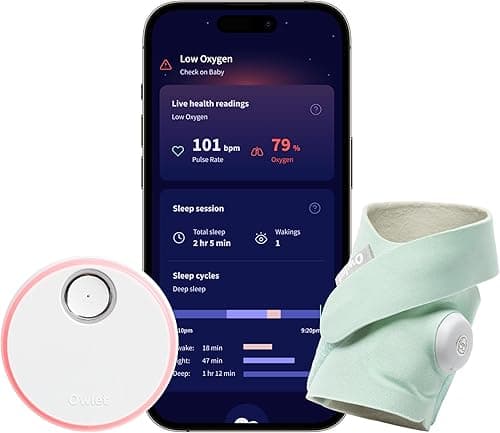
Owlet Dream Sock® – FDA-Cleared Smart Baby Monitor
The Owlet Dream Sock is the only FDA-cleared smart baby monitor that tracks live pulse rate and oxygen levels while your newborn sleeps, alerting you on your phone if readings fall outside healthy ranges. For anxious parents of newborns, it's life-changing peace of mind.
This guide is different. At GooGaia, we’ve stripped away the gimmicks. We analyzed clinical data, consulted with pediatric sleep specialists, and listened to the lived experiences of thousands of parents to distill the market down to 10 products that genuinely make a measurable difference in how well—and how safely—your baby sleeps.
1. The Command Center of Your Nursery: Smart Sound Machines
In the womb, a baby is never in silence. They are enveloped in a constant, rhythmic 85-decibel symphony of blood rushing, heartbeats, and digestive sounds—a volume roughly equivalent to a vacuum cleaner. This is why a perfectly quiet nursery can actually be startling to a newborn. White noise acts as a "sensory bridge" from the womb to the world.
The Hatch Rest has become the gold standard for a reason. It isn't just a sound machine; it is a multi-stage sleep tool that grows with your child. In the newborn stage, it provides consistent, high-quality white noise that masks household sounds (like a barking dog or a slamming door). As your baby enters toddlerhood, it transitions into an "okay-to-wake" clock, using color cues to teach a child when it’s time to stay in bed and when it’s time to start the day.
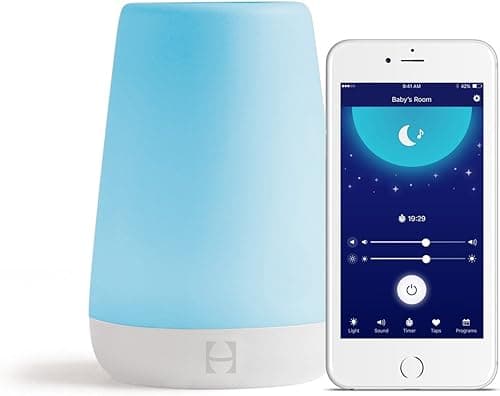
Hatch Rest Baby Sound Machine + Night Light
The Hatch Rest is the gold standard of nursery tech — it's a white noise machine, night light, "okay-to-wake" clock, and lullaby player all in one, controlled quietly from your phone. No more tip-toeing in to adjust the volume at 3 AM.
Expert Tip: The single biggest advantage of a smartphone-controlled machine is the ability to adjust settings without "the creak." Every parent knows the terror of a floorboard creaking as you try to check on a sleeping baby. With the Hatch, you can increase the volume or dim the light from the hallway, ensuring the environment remains perfect without you ever crossing the threshold.
2. The Mattress That Parents Can Actually Breathe About
Safe sleep is the non-negotiable foundation of infant health. Every pediatrician will tell you that the primary concern in the first year of life is SIDS (Sudden Infant Death Syndrome) and SUID (Sudden Unexpected Infant Death). A major risk factor is "rebreathing"—when a baby rolls onto their stomach and breathes in their own exhaled carbon dioxide trapped in a traditional mattress, leading to hypoxia.
The Newton Baby Mattress features a patented Wovenaire® core made of 90% air and 10% food-grade polymer. This design is so porous that you can literally press your face firmly against it and breathe normally.
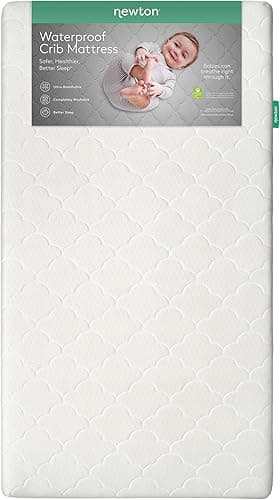
Newton Baby Waterproof Crib Mattress & Toddler Bed
Newton's revolutionary Wovenaire® core is 90% air — if a baby rolls onto it face-down, they can breathe right through it, making it the only crib mattress with a breathe-through design. It's also 100% washable, from the cover to the core.
Parent-to-Parent Tip: Beyond the safety benefits, this mattress is a hygiene miracle. Traditional mattresses are breeding grounds for bacteria and mold because you can only clean the surface. The Newton core can be taken into the shower and hosed down after the inevitable "blowout" or stomach flu incident. It’s an investment in both safety and sanity.
3. The Arms-Up Swaddle for Natural Self-Soothing
The Moro reflex, or startle reflex, is a biological vestige that causes babies to jerk their arms outward when they feel a sensation of falling or hear a loud noise. This reflex is the #1 culprit for "the 20-minute nap." Traditional swaddles pin a baby’s arms to their sides, which works for some but causes others to fight the wrap until they "Houdini" their way out.
The Love To Dream Swaddle UP is revolutionary because it honors the "arms-up" surrender position that most babies naturally adopt in the womb. This allows the baby to touch their face or suck on their hands—natural self-soothing behaviors—while still providing enough resistance to suppress the startle reflex.
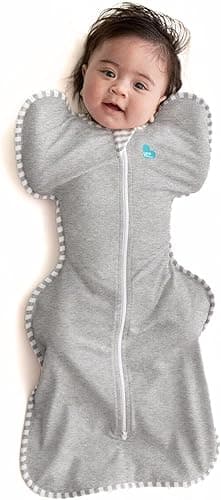
Love To Dream Swaddle UP – Arms-Up Swaddle
Instead of wrapping arms down (the traditional way), the Love to Dream Swaddle UP lets babies sleep in their natural arms-up "surrender" position — which mimics the womb and leads to dramatically better (and longer) nighttime sleep from day one.
When to Transition: Once your baby shows signs of rolling over, swaddling must stop immediately for safety. Look for the "Transition Bag" version of this product, which allows you to unzip one wing at a time, helping your baby adjust to free arms without losing the snug feeling they crave.
4. The Bedside Sleeper That Protects the Bond
The American Academy of Pediatrics (AAP) recommends room-sharing for at least the first six months to significantly reduce the risk of SIDS. However, bed-sharing (having the baby in your bed) carries significant risks. The HALO BassiNest solves this tension perfectly. Its 360-degree swivel allows the baby to sleep inches from your face on their own separate, firm surface.
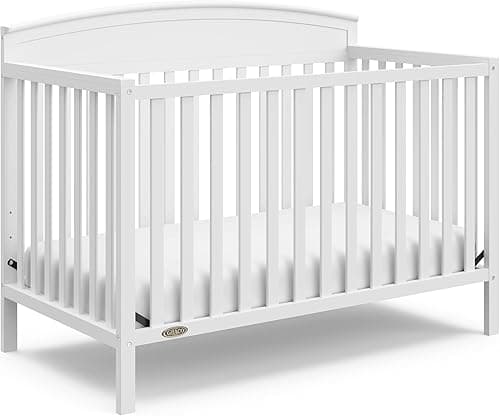
HALO BassiNest Swivel Sleeper Bassinet
The HALO BassiNest is the AAP's recommended bedside sleeper — it rotates 360° and the side wall lowers so you can reach your newborn without getting up. For C-section recovery and nighttime breastfeeding, it's been called "the most important baby gear purchase."
Expert Tip for C-Section Recovery: For parents recovering from abdominal surgery, sitting up and reaching over a traditional bassinet rail is incredibly painful. The BassiNest features a patented lowering bedside wall that collapses with a gentle push of your forearms, allowing you to soothe or scoop up your baby for nursing without leaving your bed.
5. The Sleep Sack for Long-Term Safety
Once the swaddle is retired, the "wearable blanket" becomes the MVP of the nursery. Loose blankets are a major safety hazard in a crib until at least 12 months of age, as they can easily cover a baby’s face and obstruct breathing. The HALO SleepSack is the industry leader, widely used in hospitals across North America.
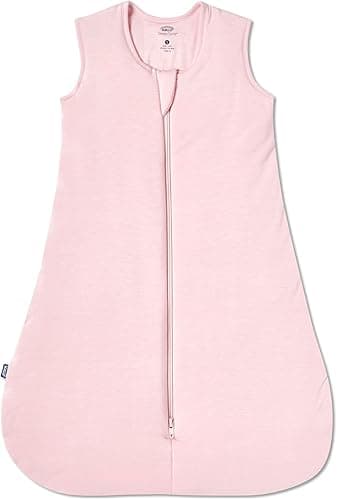
HALO SleepSack Wearable Blanket – 100% Cotton
The HALO SleepSack is the #1 pediatrician-recommended wearable blanket and is accepted by the American Academy of Pediatrics as safe sleep. It keeps babies warm and cozy throughout the night without any loose blanket risk.
Parent-to-Parent Tip: Pay attention to the TOG (Thermal Overall Grade) rating. A 0.5 TOG is lightweight for summer, while a 2.5 TOG is quilted for winter. Overheating is a major risk factor for SIDS; a baby who is too warm will sleep too deeply to rouse themselves when they need more oxygen. Always feel your baby’s chest or the back of their neck—if they are sweaty, they are too warm, regardless of what the room thermometer says.
6. The Solution for Sensitive Skin: Bamboo Sleep Bags
For babies with eczema or highly sensitive skin, the material of their sleepwear is just as important as the fit. Bamboo fabric is naturally hypoallergenic, moisture-wicking, and incredibly soft. The Kyte Baby Sleep Bag has achieved "cult status" among parents because of its buttery texture and temperature-regulating properties.
Kyte Baby Sleep Bag – Bamboo Wearable Blanket
Kyte Baby's sleep bag is made from buttery-soft OEKO-TEX certified bamboo rayon — it's temperature-regulating, hypoallergenic, and genuinely the softest sleep sack on the market. Parents who try it say they've never felt fabric this soft on a baby.
Scientific Context: Bamboo is highly breathable. Research shows that babies who are kept at an optimal, stable temperature experience fewer night wakings. Because bamboo pulls moisture away from the skin, it prevents the "chill" that happens when a baby sweats in polyester or heavy cotton and then cools down too quickly.
7. The Mechanical Power of the "Old School" White Noise
While digital sound machines offer variety, some sleep purists and clinical specialists prefer "analog" sound. The Yogasleep Dohm Classic has been in production since 1962. Unlike digital machines that play a recording on a loop (which some sensitive babies can actually "hear" and get distracted by), the Dohm uses a real internal fan to create a natural rushing air sound.
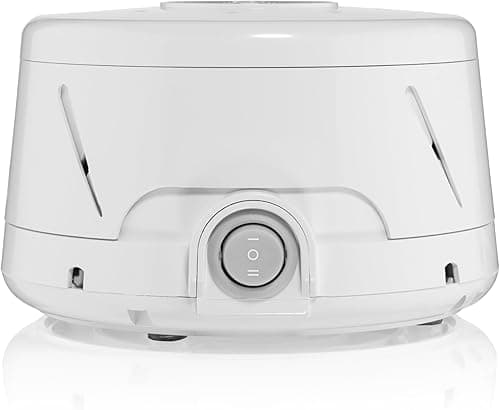
Yogasleep Dohm Classic White Noise Sound Machine
The Dohm Classic uses a real fan motor (not a digital recording) to produce natural, rich white noise — which is why sleep specialists have been recommending it for 60 years. The adjustable two-speed fan and acoustic housing let you tune the exact tone you need.
Expert Tip: This is the perfect choice for the parent who wants to "set it and forget it." There are no apps to crash and no WiFi signals required. It creates a consistent frequency spectrum that effectively "blurs" the sharp edges of household noise, making it easier for a baby’s brain to stay in a deep sleep state.
8. Clinical Peace of Mind: The Smart Sock
For many parents, the anxiety of "is the baby breathing?" is a significant barrier to their own sleep. The Owlet Dream Sock is now FDA-cleared as a medical device, providing real-time monitoring of a baby’s pulse rate and oxygen levels.
Owlet Dream Sock® – FDA-Cleared Smart Baby Monitor
The Owlet Dream Sock is the only FDA-cleared smart baby monitor that tracks live pulse rate and oxygen levels while your newborn sleeps, alerting you on your phone if readings fall outside healthy ranges. For anxious parents of newborns, it's life-changing peace of mind.
Expert Perspective: While technology should never replace safe sleep practices (back to sleep, firm mattress, empty crib), the Owlet provides a level of data that can be life-changing for parents of babies with underlying health concerns or those transitioning home from the NICU. It moves the conversation from "I think they’re okay" to "I know they’re okay."
9. Data-Driven Parenting: The Overhead Monitor
If the Owlet is about vitals, the Nanit Pro is about behavior and environment. This overhead camera uses "computer vision" to track how many times your baby woke up, how long it took them to fall back asleep, and even their breathing motion through specialized fabric patterns on their pajamas.
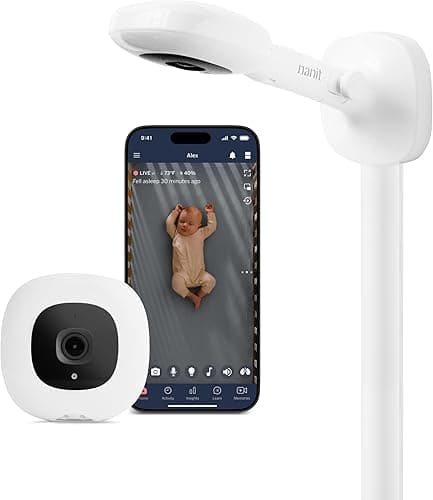
Nanit Pro Smart Baby Monitor & Wall Mount Camera
The Nanit Pro is a stunning overhead nursery camera that monitors your baby's sleep — tracking breathing motion, sleep quality, and even coaching you with personalized sleep tips. The 1080p HD video is crystal clear day and night.
Practical Tip: The Nanit’s morning "Sleep Summary" is incredibly helpful for identifying sleep regressions or realizing that your baby’s "fussy time" actually correlates with a room temperature drop at 4 AM. It turns sleep from a mystery into a manageable set of data points.
10. The Secret Weapon for Travel: The Blackout Pod
The biggest threat to a baby’s sleep schedule is a change in environment. Whether it's a bright hotel room or a grandparent's guest room with thin curtains, light is the enemy of melatonin. The SlumberPod is a bottomless, breathable blackout tent that fits over a travel crib or pack-n-play.
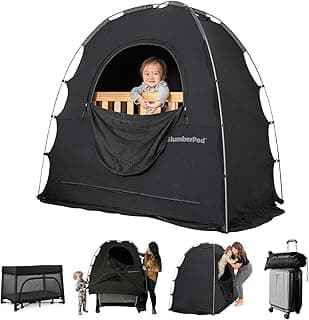
SlumberPod 3.0 Portable Blackout Privacy Pod
The SlumberPod is a genius travel accessory that creates a pitch-black sleep environment over any standard pack-n-play or mini crib. When you're staying in hotels, at grandparents', or camping, it recreates the exact dark nursery environment your baby is used to — often saving the entire vacation.
Parent-to-Parent Tip: This is the only product that allows you to share a hotel room with your baby and actually leave the lights on in your half of the room. It creates a dedicated "dark zone" that maintains the sleep associations you've worked so hard to build at home.
The Science of the Sleep Environment
While these products are the "hardware" of good sleep, the "software" is your routine and environment. Biology dictates that three things must be present for optimal infant sleep:
1. The Role of Total Darkness
Light suppresses the production of melatonin, the hormone that tells the brain it is time to sleep. Even the small LEDs on a baby monitor or a humidifier can be enough to rouse a baby during a light sleep cycle. Aim for a room so dark you cannot see your hand in front of your face.
2. The Ideal Temperature
Research suggests the ideal nursery temperature is between 68–72°F (20–22°C). A slightly cool room promotes deeper sleep and reduces the risk of overheating. If the baby’s hands feel cool, that is normal; check their chest for a true reading of their core temperature.
3. The Power of Routine
A baby’s brain thrives on "predictive cues." A consistent 15-minute routine—perhaps a warm bath, a specific lotion, a short book, and then the white noise machine—signals to the nervous system that the day is over. Within a few weeks of consistency, the first step of the routine alone will trigger the "wind-down" response in your baby.
When to Call the Doctor
While products can solve for comfort and environment, they cannot solve for medical issues. You should consult your pediatrician if:
- Your baby is consistently snoring or gasping for air (this can indicate obstructive sleep apnea).
- Your baby seems in pain or arching their back during or after feeds (this may be reflux).
- Your baby is over 6 months old and is still unable to sleep for more than 1-2 hours at a time, which may indicate an underlying iron deficiency or other developmental hurdle.
The goal of building a robust sleep environment isn't about "perfect" sleep—it's about giving your baby the best possible conditions to succeed. With the right tools and a consistent approach, you aren't just buying a gadget; you're investing in your family’s collective well-being.