The Baby Shusher: Does It Actually Work?
New parents quickly learn that the silence they once craved is now their greatest source of anxiety—and that a crying infant can produce a level of decibels that feels physically taxing. Amidst the sea of gadgets promising "magic" sleep solutions, the Baby Shusher stands out for its simplicity and its singular focus. But behind its humble, almost toy-like appearance lies a deep foundation of neonatal science and developmental psychology.
At GooGaia, we believe in products that respect the biological needs of a developing infant while providing much-needed relief to caregivers. To understand if the Baby Shusher actually works, we have to look beyond the device itself and into the sensory world of the "Fourth Trimester."
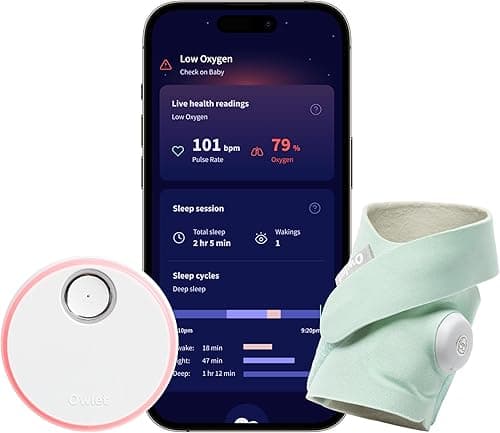
Owlet Dream Sock® – FDA-Cleared Smart Baby Monitor
The Owlet Dream Sock is the only FDA-cleared smart baby monitor that tracks live pulse rate and oxygen levels while your newborn sleeps, alerting you on your phone if readings fall outside healthy ranges. For anxious parents of newborns, it's life-changing peace of mind.
The Science of the "Shush": Why Sound Matters for Development
To an adult, a quiet room is the ideal sleep environment. To a newborn, however, total silence is unnervingly foreign. For nine months, your baby lived in an environment that was louder than a vacuum cleaner. They were constantly enveloped by the rhythmic "whooshing" of blood through the placenta, the beating of your heart, and the muffled vibrations of your voice.
This auditory environment typically clocks in at around 80 to 90 decibels. When a baby is born, the transition to the "outside world" can be a sensory shock. The Baby Shusher works by engaging the Calming Reflex, a term coined by Dr. Harvey Karp (author of The Happiest Baby on the Block). This reflex is essentially an "off switch" for crying, and it is triggered by five specific sensations—the most potent of which is rhythmic "shushing."
The Neurological Impact of Rhythmic Sound
The rhythmic nature of the Shusher is key. Unlike static white noise, which provides a constant floor of sound, the rhythmic "shh-shh-shh" pattern mimics the pulsatile flow of blood in the womb. Neurologically, this rhythmic input helps the infant’s nervous system regulate. When a baby is in a state of high arousal (screaming or overtired), their "fight or flight" system is firing. Rhythmic shushing provides a predictable external stimulus that allows the brain to shift from a state of distress to a state of calm.
Breaking Down the Device: How It Works
The Baby Shusher is a portable, battery-operated device designed to do one thing: emit a loud, rhythmic shushing sound. While it may look like a simple orange and white cylinder, its design addresses several practical parenting hurdles.
Precise Volume Control
One of the most common mistakes parents make is shushing too quietly. If a baby is screaming at 90 decibels, they literally cannot hear a gentle whisper. The Baby Shusher allows you to turn the volume up to a level that "breaks through" the crying, catching the baby's attention so the calming reflex can take over.
The Timer Function
The device features two timer options: 15 minutes and 30 minutes. This is designed to cover the critical "falling asleep" window. For many infants, the rhythmic sound is needed to bridge the gap between active crying and deep sleep. Once the baby has transitioned through the lighter stages of sleep, the device shuts off automatically to preserve battery life.
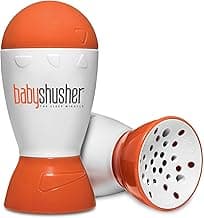
Baby Shusher Sleep Miracle
BABY SOUND MACHINE FOR SLEEPING - Break crying spells with Baby Shusher, a portable sound machine that uses a unique, rhythmic, real human "Shhh" sounds to calm your newborn and help with restful sleep. No lights, music or distracting sounds included
Why Quality and Safety Matter in Sound Machines
When choosing sleep aids for your nursery, the quality of the product isn't just about durability; it’s about safety. Low-quality audio devices can produce harsh frequencies that may be irritating rather than soothing, or worse, they may have inconsistent volume limiters.
Expert Tip: Decibel Safety While the Baby Shusher needs to be loud enough to be heard over a crying baby, it should never be placed directly against an infant's ear. The American Academy of Pediatrics (AAP) recommends that white noise machines be placed at least 7 feet (2 meters) away from the baby’s crib and that the volume be kept below 50 decibels for long-term use. Use the Baby Shusher at a higher volume to stop a crying spell, but once the baby has calmed down, consider lowering the volume or moving the device further away.
Practical "Parent-to-Parent" Tips for Success
As any veteran parent will tell you, a tool is only as good as how you use it. Here are some field-tested strategies for getting the most out of the Baby Shusher:
- The "Transfer" Technique: Many babies wake up the moment they are moved from your arms to the crib. Start the Baby Shusher while you are still holding the baby and rocking them. As you make the transfer, keep the Shusher close to them. The continuity of the sound helps mask the change in physical sensation.
- The Car Ride Savior: Car seats are notorious for triggering "witching hour" meltdowns. Since the Baby Shusher is portable and doesn't require a plug, it is arguably the best tool for long car rides where you cannot physically comfort your child. Secure it safely in a cup holder or a seat pocket near the baby.
- Combine with the Swaddle: The "Shush" is only one of the 5 S's. For maximum effectiveness during a true "meltdown" period, swaddle your baby snugly before turning on the Shusher. The combination of physical restriction (mimicking the tight womb) and rhythmic sound is significantly more effective than sound alone.
- The Public "Reset": If you are at a restaurant or a grocery store and your baby begins to overstimulate, the Shusher can act as a "portable cocoon," helping to drown out the chaotic noises of the environment and allowing the baby to focus on a singular, calming input.
Dealing with the "Witching Hour"
Most parents experience the dreaded "Witching Hour"—that period in the late afternoon or early evening when a baby seems inconsolable for no apparent reason. During this time, the infant’s nervous system is often overstimulated from a full day of sights and sounds.
The Baby Shusher is particularly effective here because it provides a "sensory reset." When you are physically exhausted and your own vocal cords are tired from manual shushing, the device takes over the heavy lifting. This prevents "parental burnout," allowing you to remain calm and empathetic rather than frustrated by the noise.
When to Call the Doctor: Understanding Infantile Distress
While the Baby Shusher is a miracle worker for "normal" fussiness and sleep transitions, it is important to distinguish between a baby who needs soothing and a baby who is in pain.
Expert Tip: The Limits of Soothing If your baby is crying inconsolably for more than three hours a day, three days a week, for at least three weeks, they may be experiencing colic. While the Baby Shusher can help manage the symptoms of colic, you should consult your pediatrician to rule out underlying issues such as:
- Gastroesophageal Reflux (GERD): If the baby arches their back and cries specifically after feeding.
- Food Sensitivities: If there is blood in the stool or excessive gas.
- Infection: If the crying is accompanied by a fever or lethargy.
If the Baby Shusher, feeding, and changing do not result in any calming after a reasonable period, it is always best to check in with a medical professional.
The Verdict: Is It Worth It?
From an aesthetic standpoint, the Baby Shusher is a simple, orange plastic device. It doesn't have the high-tech look of a smart bassinet or the cuteness of a plush toy. However, its beauty lies in its effectiveness.
By automating the rhythmic shushing sound, it saves parents from the lightheadedness and physical fatigue of manual shushing. It provides a consistent, reliable auditory cue that tells the baby’s brain, "It is time to be calm. You are safe. You are back in the womb."
For families dealing with difficult bedtimes, stressful car rides, or the exhausting "witching hour," the Baby Shusher is more than just a gadget; it is a bridge to a more peaceful household. It respects the biological reality of the newborn and provides parents with a hands-free way to soothe their child with empathy and science-backed precision.
In the world of parenting, "miracles" are rare—but tools that align with a baby’s natural instincts are the next best thing. The Baby Shusher is one of those rare tools that actually lives up to the hype.