Why the Hatch Rest+ is Essential for Toddlers
The transition from infancy to toddlerhood is one of the most remarkable phases of human development. It is a period defined by rapid neurological growth, the emergence of autonomy, and, quite frequently, a significant disruption in established sleep patterns. As a pediatric specialist, I often see parents who feel defeated by the "toddler sleep regression"—that stage where a once-perfectly sleeping baby suddenly refuses to stay in bed, develops a fear of the dark, or begins waking at 5:00 AM with boundless energy.
In this context, we must view sleep not just as a biological necessity, but as a learned skill. The tools we provide our children during this phase are the "scaffolding" upon which they build their independence. While many products claim to solve sleep issues, the Hatch Rest+ has distinguished itself as an essential developmental tool. It is more than a sound machine; it is a communication bridge between parent and child.
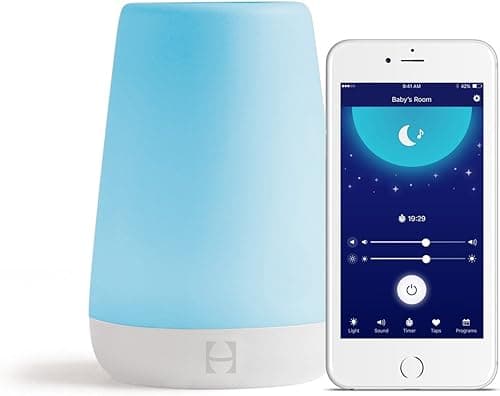
Hatch Rest Baby Sound Machine + Night Light
The Hatch Rest is the gold standard of nursery tech — it's a white noise machine, night light, "okay-to-wake" clock, and lullaby player all in one, controlled quietly from your phone. No more tip-toeing in to adjust the volume at 3 AM.
The Science of Sleep: Why External Cues Matter for Toddlers
To understand why the Hatch Rest+ is so effective, we must first look at the toddler brain. Between the ages of two and four, children are developing a sense of "executive function," yet they still lack a linear concept of time. A toddler does not understand what "7:00 AM" means, but they are highly responsive to visual and auditory cues.
The Role of Melatonin and Light Spectrums
Not all light is created equal. The Hatch Rest+ allows parents to customize the color spectrum of the nightlight, which is scientifically significant. Blue light, common in many standard nightlights and screens, suppresses melatonin production—the hormone responsible for sleep. By utilizing the Hatch’s warm red or amber settings, parents can provide a comforting glow that does not interfere with the child’s natural circadian rhythm.
Auditory Masking and Brain Plasticity
The toddler years are a time of "peak hearing." Children are hyper-aware of their environment. The "white noise" or "pink noise" functions of the Hatch serve two purposes: they mask disruptive household sounds (the "startle response") and create a Pavlovian association with sleep. When that specific sound starts, the toddler’s brain receives a signal that it is time to downregulate the nervous system.
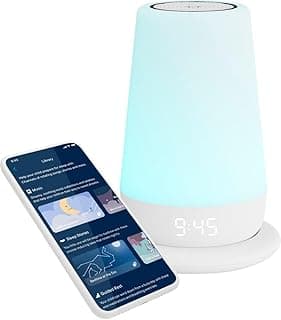
The "Time-to-Rise" System: Behavioral Training Through Color
The hallmark of the Hatch Rest+ is its "Time-to-Rise" feature. In the newborn phase, the device is passive—it simply provides a soothing environment. However, as your child reaches the age of 18 to 24 months, the Hatch transforms into a behavioral coach.
Establishing the "Red Means Bed" Rule
The most common struggle for parents is the "early riser." A toddler who wakes up at dawn and immediately runs into the parents' room is simply following their internal clock. The Hatch allows you to program a specific color—usually Red—to signify that it is still time to sleep or play quietly in bed. When the light turns Green at a pre-set time, the child receives a clear, non-verbal "permission" to start their day.
Cognitive Scaffolding and Autonomy
By using this system, you are giving your toddler a sense of agency. They no longer have to wonder if it’s morning; they can look at their Hatch and know exactly where they stand. This reduces "reassurance seeking" behavior and empowers the child to manage their own morning routine.
Expert Tip: Introduce the "Time-to-Rise" system during the day first. Play a game where you turn the light red and "pretend sleep," then cheer and "wake up" when it turns green. This ensures the child understands the "rules of the game" before they are tested in the middle of the night.
Remote Management: The "Stealth Parent" Approach
One of the most valuable features of the Hatch Rest+ for the toddler years is its WiFi connectivity and smartphone integration. In pediatric sleep hygiene, "presence" can often be a double-edged sword. If a parent enters the room to soothe a restless toddler, the child may become more stimulated, leading to a prolonged "curtain call" (the endless requests for water, hugs, or another story).
The 5:00 AM Intervention
If you see on your monitor that your child is stirring at 5:00 AM, you can use the Hatch app to subtly change the sound or increase the volume of the white noise from your own bed. This "stealth intervention" can often lull a child back to sleep without them ever knowing you were involved.
Adjusting for Transitions
If your child is having a particularly difficult night—perhaps due to illness or travel—you can transition the sound from white noise to a gentle lullaby or "rain" sounds remotely. This allows for comfort without the physical disruption of a parent entering the room, which often resets the "sleep clock" and makes it harder for the child to settle back down.
Key Features That Address Toddler-Specific Challenges
The Hatch Rest+ was clearly designed with the reality of toddler behavior in mind.
The Toddler Lock
Toddlers are natural explorers and love to press buttons. The Hatch Rest+ includes a "Toddler Lock" feature via the app that disables the physical buttons on the device. This prevents your child from turning the volume to max or changing their "Time-to-Rise" light to green at 3:00 AM.
Battery Backup: Reliability in Power Outages
For a toddler who relies on their sound machine for security, a power outage can be a major source of anxiety. The Rest+ includes a battery backup, ensuring that the light and sound continue even if the power flickers. This consistency is vital for maintaining a sense of safety.
The Two-Way Audio Monitor
While many parents transition away from traditional video monitors as children get older, the audio monitor feature on the Rest+ is a fantastic "safety net." It allows you to listen in if you hear a crash or a cry, and in some models, it allows for two-way communication if you need to offer a quick verbal reassurance.
Implementing the Hatch: A Step-by-Step Guide for Success
Simply buying the device isn't enough; you must implement it with consistency. Here is a recommended protocol for using the Hatch with a toddler:
- Selection: Let your toddler help pick the "sleep color" (we recommend red or orange) and the "wake-up color" (green is the industry standard). Giving them a choice increases their "buy-in."
- The Wind-Down: Program a "Bath/Story" setting. For example, 30 minutes before bed, the Hatch turns a soft purple and plays gentle music. This serves as a transition cue that the day is ending.
- The "Yellow" Phase (Optional): Some parents find success using a yellow light for 15 minutes before the green "wake" light. This tells the toddler: "You can play with your stuffed animals in your crib/bed now, but don't come out yet."
- Positive Reinforcement: If your child stays in bed until the light turns green, celebrate it! Use a sticker chart or extra morning snuggles to reinforce the behavior.
Expert Tip: The "Two-Minute Buffer"
When you first start the "Time-to-Rise" program, set the green light for 2 minutes before your toddler usually wakes up. This ensures they "win" the game immediately. As they get used to the system, you can slowly move the green light back in 5-minute increments until you reach your desired wake-up time.
When to Call the Doctor: Understanding Sleep Beyond Gadgets
While the Hatch Rest+ is an incredible tool for behavioral and environmental sleep issues, it is important to recognize when a sleep struggle is medical rather than behavioral. You should consult your pediatrician if:
- Snoring or Mouth Breathing: If your toddler snores loudly or seems to struggle for breath, this could indicate obstructive sleep apnea or enlarged tonsils/adenoids.
- Night Terrors vs. Nightmares: Frequent, inconsolable screaming where the child is not actually awake may require a specialist's evaluation.
- Restless Leg Movements: Excessive thrashing or "growing pains" at night can sometimes indicate iron deficiencies.
- Extreme Insomnia: If your child is unable to fall asleep despite a perfect environment and a consistent routine, there may be underlying sensory or neurological factors at play.
Longevity: Why the Hatch Rest+ is a Sound Investment
In the world of baby gear, many products have a shelf life of six months. The Hatch Rest+ is a rare exception.
- Ages 0-2: It is a high-quality white noise machine and nightlight for feedings.
- Ages 2-5: It is a behavioral "Time-to-Rise" coach and boundary setter.
- Ages 5+: It becomes a bedside clock and alarm that helps school-aged children take responsibility for their own mornings.
The build quality is robust, and the software updates through the Hatch app mean the device actually improves over time. From a "cost-per-use" perspective, it is one of the most economical investments a parent can make.
Final Verdict: Empowerment for the Whole Family
Parenting a toddler is an exercise in patience and boundary-setting. Sleep is often the first "battleground" where these boundaries are tested. By using the Hatch Rest+, you are moving away from a reactive parenting style (responding to every 5:00 AM wake-up with frustration) and moving toward a proactive, educational style.
The Hatch Rest+ doesn't just help your toddler sleep; it gives you, the parent, your mornings back. It provides the gift of a quiet cup of coffee, a predictable routine, and a child who feels confident and secure in their own space. In the journey of parenthood, that peace of mind is truly essential.