Digital vs. Mechanical: Hatch Rest vs. Yogasleep Dohm
The Science of Slumber: Navigating Digital vs. Mechanical Sleep Aids for Your Child
As parents, few things are more critical than our children's sleep. From infancy through the formative years, adequate, restorative sleep is the cornerstone of healthy development, impacting everything from cognitive function and emotional regulation to physical growth and immune system strength. In the quest for peaceful nights, modern parents often turn to sleep aids, with white noise machines and nightlights leading the charge. Yet, the sheer volume of options can be overwhelming.
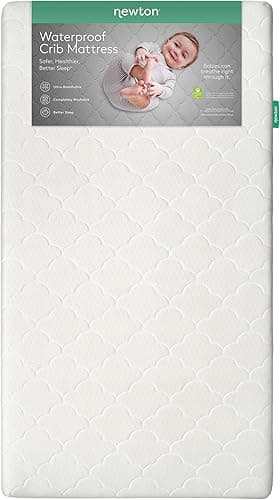
Newton Baby Waterproof Crib Mattress & Toddler Bed
Newton's revolutionary Wovenaire® core is 90% air — if a baby rolls onto it face-down, they can breathe right through it, making it the only crib mattress with a breathe-through design. It's also 100% washable, from the cover to the core.
At GooGaia, we believe in empowering parents with evidence-based insights. Today, we're diving deep into two titans of the pediatric sleep world: the feature-rich, digital Hatch Rest and the elegantly simple, mechanical Yogasleep Dohm. This isn't just a product comparison; it's an exploration of philosophies, a look at what truly supports a child's developing brain, and a guide to making the best choice for your family's unique needs.
Understanding the Core Philosophies: Digital Innovation vs. Mechanical Purity
At their heart, the Hatch Rest and the Yogasleep Dohm represent two distinct approaches to sleep support.
The Digital Powerhouse: Hatch Rest Imagine a smart device meticulously crafted for the nursery. The Hatch Rest is precisely that – a sophisticated "computer" designed to be the central hub of your child's sleep environment. It integrates multiple functions into one sleek unit: a sound machine, a customizable nightlight, a time-to-rise sleep trainer, and all controlled intuitively via a smartphone app. Its philosophy is rooted in versatility, personalization, and modern convenience, offering a dynamic tool that can evolve with your child's developmental stages.
The Mechanical Marvel: Yogasleep Dohm In stark contrast, the Yogasleep Dohm embodies minimalist brilliance. Often described as "a fan in a box," its design is elegantly straightforward. It doesn't connect to Wi-Fi, doesn't feature an array of colored lights, and isn't app-controlled. What it does, it does perfectly: it generates a genuine, non-looping white noise sound using a real fan within an acoustically designed enclosure. Its philosophy champions simplicity, reliability, and the purity of an organic sound profile, focusing intently on one core function.
One offers limitless digital options, catering to every imaginable scenario; the other provides one perfect, analog solution. Both, however, have earned their place as indispensable tools in countless nurseries worldwide.
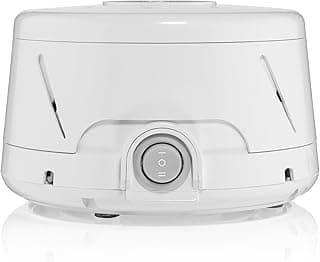
Yogasleep Dohm (The Classic)
ORIGINAL SLEEP SOUND MACHINE: Beloved by millions since 1962, the Dohm Classic was the first white noise machine ever created. It features our signature sound: natural, comforting, fan-based white noise—without the annoyance of actual moving air.
Why We Compare Them: Heavyweights in the Sleep Arena
These two devices aren't just popular; they are industry heavyweights, defining different segments of the sleep aid market. Their prominence stems from their proven effectiveness and strong brand recognition.
- Hatch Rest: Represents the premium, feature-rich end of the spectrum. It appeals to tech-savvy parents who value customization, smart home integration, and a device that can grow with their child, offering multiple functionalities in one. It's an investment in a comprehensive sleep ecosystem.
- Yogasleep Dohm: Champions supreme value and a specific, alternative focus – the authentic, natural white noise experience. It appeals to parents seeking simplicity, reliability, and a device free from digital emissions or complex interfaces. For those prioritizing an eco-friendly approach or minimizing screen time, its mechanical nature is a significant draw.
The comparison isn't about declaring one definitively "better" but rather understanding which solution aligns best with your family's specific values, your child's needs, and your desired sleep environment.
Key Comparison Specifications: A Deeper Dive
Let's break down the core features to understand the nuances of each device.
Hatch Rest: The Customizable Ecosystem
- App Controlled: This is the Hatch's superpower. Parents can remotely adjust volume, sounds, light colors, and brightness from their smartphone, even without entering the nursery. This is invaluable for middle-of-the-night adjustments without disturbing a sleeping child. The app also allows for programming custom routines, setting schedules, and even checking sleep metrics in some models.
- Scientific Context: Remote control allows for fine-tuning the sleep environment without causing disruptions that might trigger partial awakenings, which can fragment sleep architecture. Consistent sleep cues, delivered reliably, help consolidate sleep.
- Nightlight: The Hatch Rest boasts a vibrant, full-spectrum LED nightlight. This isn't just for illumination; it's a powerful tool. Parents can choose from a rainbow of colors, using warmer hues (red, amber) for nighttime feeds to minimize blue light exposure, which can suppress melatonin production. For toddlers, it's integral to the "Time-to-Rise" feature.
- Scientific Context: The impact of light on circadian rhythms is profound. Warm, dim light during nighttime awakenings is less disruptive to melatonin production than harsh blue or white light, facilitating an easier return to sleep.
- Many Sounds: From various white noises (fan, static, ocean waves, rain) to lullabies, nature sounds, and even stories (with a subscription), the Hatch offers a vast sound library. This allows parents to experiment and find the perfect calming sound for their child, adapting as preferences change.
- Scientific Context: Different children respond to different auditory stimuli. Some find continuous white noise most soothing, while others prefer more varied nature sounds. The brain processes these sounds, helping to mask sudden household noises that might otherwise cause arousal from sleep.
Yogasleep Dohm: The Unadulterated Comfort
- Mechanical Fan: This is the Dohm's defining characteristic. Instead of digitally generated sounds, a small, multi-speed fan inside the unit creates its signature "whoosh" sound. This mechanical generation ensures a truly organic, non-looping, broadband white noise.
- Scientific Context: The human brain is remarkably adept at detecting patterns. Digitally looped sounds, no matter how subtly looped, can eventually become predictable and even distracting to some individuals, potentially disrupting sleep quality. A truly random, non-looping sound, like that generated by a mechanical fan, offers a consistent, brain-friendly auditory environment that is easier for the brain to "tune out."
- One Sound (Whoosh): While it only offers one type of sound, the Dohm allows for subtle variations in tone and volume by adjusting the fan speed and rotating the housing. This provides a customizable "whoosh" that is instantly recognizable and deeply comforting to many.
- Scientific Context: Consistency in the sleep environment is crucial for establishing strong sleep associations. Having one reliable, effective sound source can signal to a child that it's time to sleep, strengthening their sleep routine.
- Price: At around $45, the Dohm is significantly more affordable than the Hatch, making it an accessible option for many families.
The Price Point: Value, Investment, and Long-Term Use
The price difference between the Hatch Rest (~$70-90) and the Yogasleep Dohm (~$45) reflects their differing complexities and feature sets. The Dohm offers exceptional value for its core function and renowned effectiveness. It's a durable, no-frills workhorse. The Hatch, while a higher initial investment, offers a multi-functional solution that potentially replaces several individual devices (nightlight, sound machine, clock) and provides evolving utility from newborn to preschooler.
Consider your budget, but also the long-term investment. Both are high-quality products in their categories. Investing in high-quality sleep aids is often an investment in family well-being, promoting better sleep for both child and parents.
What Parents Truly Love: Beyond the Spec Sheet
Beyond the technical specifications, what truly resonates with parents are the unique benefits each device offers.
The Dohm's Organic, Non-Looping Sound
Parents consistently rave about the Yogasleep Dohm's "organic" and "non-looping" sound. For many, it's the truest, most natural white noise experience available. The consistent, unobtrusive hum effectively masks sudden household noises, barking dogs, or street sounds without introducing any discernible patterns that could become distracting. For sensitive sleepers, this lack of digital looping is a game-changer, allowing the brain to simply register it as background rather than something to analyze.
- Expert Tip: Auditory Habituation: The brain habituates to constant, non-threatening stimuli. A truly random, non-looping white noise encourages this habituation, allowing the brain to filter it out and focus on sleep. Loops, no matter how long, can eventually become noticeable patterns, potentially disrupting this process.
The Hatch's 'Ok to Wake' Training Features
For parents navigating the toddler years, the Hatch Rest's 'Ok to Wake' feature is invaluable. This system uses light cues to signal to a child when it's an acceptable time to get out of bed. For example, the light might turn blue at 6:00 AM and then green at 7:00 AM, teaching the child to wait for the green light before starting their day.
- Scientific Context: This feature leverages developmental psychology, specifically operant conditioning and the understanding of visual cues. Toddlers, who are still developing their internal clock and concept of time, benefit immensely from concrete visual signals. It fosters independence, establishes predictable routines, and can significantly reduce early morning wake-ups, promoting longer, more consolidated sleep for the entire family.
- Practical Parent-to-Parent Tip: Introducing 'Ok to Wake': Start with a short waiting period that you know your toddler can achieve (e.g., 15 minutes after they usually wake). Gradually extend the time. Reinforce the concept with positive praise when they wait for the "green light." Consider role-playing during the day to help them understand.
Real-World Application: The Dual-Device Strategy
One common "real parent review" perfectly encapsulates how these two devices can complement each other: "We run the Dohm all night for noise, but use the Hatch for the red nightlight during feeds."
This highlights a brilliant dual-device strategy. The Dohm provides the consistent, pure white noise foundation, trusted for deep, undisturbed sleep. Meanwhile, the Hatch offers specific, on-demand functionalities that the Dohm lacks, such as a gentle, red-toned nightlight for minimizing sleep disruption during nighttime diaper changes or feedings. This allows parents to leverage the best of both worlds, tailoring their sleep environment to specific needs throughout the night and across different developmental stages. It's an example of how investing in both types of high-quality products can create a highly effective, customized sleep solution.
The Verdict: Tailoring Your Choice to Your Child's Needs
Ultimately, the "better" device depends on your child's age, your family's lifestyle, and your priorities.
-
Hatch Rest is generally better for toddlers and preschoolers: Its 'Ok to Wake' feature is a game-changer for teaching independence and routine. The customizable sounds and lights can adapt as a child grows, offering lullabies for infants, white noise for toddlers, and story time for older children. Its smart features appeal to parents who want a comprehensive, adaptable sleep solution that evolves with their child's needs and fosters healthy sleep habits into the early school years.
-
Yogasleep Dohm is often preferred for newborns and for anyone (including adults) who wants deep, consistent, unadulterated white noise: For newborns, whose sleep cycles are often fragmented, the Dohm's continuous, non-looping sound provides a comforting, womb-like environment that can aid in sleep consolidation. Its simplicity means less fuss and more reliable noise. Many adults also swear by the Dohm for their own sleep, valuing its pure, non-digital sound to block out disturbances.
Expert Tip: When to Consider a Sleep Consultant
While sleep aids are incredibly helpful, they are tools, not magic wands. If your child is consistently struggling with sleep despite a consistent routine, optimal sleep environment (including white noise/nightlight), and healthy sleep hygiene practices, it might be time to consult a pediatric sleep specialist or your pediatrician. Persistent sleep difficulties can sometimes signal underlying issues that require professional guidance.
Investing in Quality for Your Child's Sleep
In conclusion, the journey to peaceful, restorative sleep for your child is profoundly important. The choices you make regarding sleep aids, from the type of sound to the lighting, can significantly impact their developing brains and bodies. Whether you opt for the versatile, feature-rich Hatch Rest or the reliable, pure Yogasleep Dohm, investing in high-quality products that support a consistent, calming sleep environment is one of the most beneficial steps you can take as a parent. Both devices, in their unique ways, stand ready to help create the sacred space where healthy sleep can flourish, contributing to happier, healthier children and well-rested families.