Sleep Associations: The Good, The Bad, and The Sustainable
"Don't nurse him to sleep or he'll never sleep alone!" "Don't use a pacifier or you'll ruin her teeth and create a habit she’ll never break!"
As a new parent, you are likely navigating a relentless storm of unsolicited advice, much of it contradictory and rooted in outdated parenting "lore." You are often warned about the dangers of creating "bad habits" from the very first week your baby comes home. In the clinical world of pediatric sleep, these habits are known as Sleep Associations or Sleep Crutches.
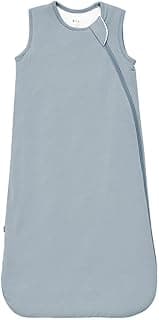
Kyte Baby Sleep Bag – Bamboo Wearable Blanket
Kyte Baby's sleep bag is made from buttery-soft OEKO-TEX certified bamboo rayon — it's temperature-regulating, hypoallergenic, and genuinely the softest sleep sack on the market. Parents who try it say they've never felt fabric this soft on a baby.
However, the term "bad habit" is a misnomer. A sleep association is simply the set of conditions—sensory, environmental, or physical—that a baby requires to transition from wakefulness to sleep. Understanding these associations is not about judging your parenting style; it is about understanding the biological architecture of infant sleep so you can build a sustainable foundation for your whole family’s rest.
The Neurobiology of Sleep Cycles: Why Associations Matter
To understand sleep associations, we must first understand how both humans and animals sleep. Sleep is not a monolithic state of unconsciousness. Instead, it is a series of cycles. For adults, a cycle lasts about 90 to 120 minutes. For infants, these cycles are much shorter, typically 45 to 50 minutes.
At the end of every cycle, we enter a state of "partial arousal." We briefly wake up, check our environment for safety, and—if everything is as it should be—we drift back into the next cycle. We often don't even remember these brief awakenings.
The "Front Lawn" Analogy
Consider this scenario: You fall asleep in your cozy bed with your favorite pillow and a heavy duvet. You feel safe and warm. However, at 2:00 AM, you experience a partial arousal and realize you are now lying on the grass in your front lawn.
You wouldn't simply roll over and go back to sleep. Your brain would trigger a massive "fight or flight" response. You would be wide awake, confused, and likely screaming for help. Why? Because the conditions under which you fell asleep have changed, and your brain perceives that change as a threat to your safety.
For a baby, the "cozy bed" is often your arms, the motion of a rocking chair, or the comfort of nursing. When they wake up at the end of a 45-minute sleep cycle and find themselves in a still, quiet, lonely crib, they experience the "front lawn" effect. They cry not out of manipulation, but out of a biological drive to find "home"—the conditions they last remember before falling asleep.
"Dependent" Associations: The Unsustainable Crutches
We often categorize associations as "Dependent" (the "Bad" associations referred to in pop-parenting). These are conditions that require a parent or caregiver to intervene every time the baby moves between sleep cycles. While these methods are wonderful tools for soothing a newborn, they can become grueling as the baby grows.
1. Feeding to Sleep (The Suck-to-Sleep Association)
This is perhaps the most common sleep association. For an infant, sucking is a powerful self-soothing mechanism that releases cholecystokinin (CCK), a hormone that induces sleepiness. Whether it’s the breast or a bottle, if a baby learns that "sucking equals sleeping," they will require that same sensation every time they wake up.
Expert Tip: If you are nursing or bottle-feeding, try to observe your baby’s jaw. If the rhythmic "active" swallowing has turned into "flutter" sucking, they are no longer eating for hunger; they are using you as a biological pacifier.
2. Rocking, Bouncing, and Motion
The vestibular system (the inner ear’s sense of balance) is highly responsive in babies. Rhythmic motion—bouncing on a yoga ball, pacing the hallway, or using a motorized swing—can lulls a baby into a deep sleep. The problem arises when the motion stops. As soon as the baby hits the "light sleep" phase of their cycle, the absence of movement signals an alarm. What was easy with an 8-pound newborn can become physically punishing when you are rocking a 20-pound 9-month-old for hours every night.
3. The "Pacifier Run"
The pacifier is a fantastic tool for the "Fourth Trimester." However, it becomes a dependent association if the baby does not have the motor skills to replace it themselves. If the pacifier falls out of their mouth during a sleep cycle transition and they can’t find it, they will cry for you to come in and "plug" them back in. This can lead to parents making 5 to 10 "pacifier runs" per night.
"Independent" Associations: The Sustainable Foundations
"Good" sleep associations are those that are sustainable, safe, and—most importantly—present throughout the entire night without your intervention. These allow the baby to bridge the gap between sleep cycles independently.
1. Environmental Consistency: White Noise
White noise mimics the auditory environment of the womb, which is surprisingly loud (often compared to the roar of a vacuum cleaner). A high-quality white noise machine provides a consistent "sound blanket" that masks household noises (a barking dog, a dropped glass) and stays on all night. Because the sound doesn't change, the baby's brain doesn't register a "threat" when they wake up between cycles.
2. The Power of Darkness
A baby’s circadian rhythm is highly sensitive to light. Exposure to light, even the dim glow of a nightlight or a smartphone, can inhibit the production of melatonin, the "sleep hormone." Using blackout curtains to create a "cave-like" environment is one of the most effective, passive sleep associations you can implement.
3. High-Quality Sleep Gear: Sleep Sacks and Wearable Blankets
Safety is the foundation of good sleep. Loose blankets are a hazard in the crib, but a high-quality, breathable sleep sack provides the "snug" feeling babies crave while keeping them at a safe temperature. It also becomes a powerful sensory cue: when the sleep sack goes on, the brain receives a signal that it is time to power down.
When choosing sleep gear, always prioritize products made from natural fibers like organic cotton or bamboo. These materials help regulate the baby's temperature, preventing the overheating that often leads to middle-of-the-night awakenings.
4. Self-Soothing Skills (The Thumb and the Hand)
Around the 3-to-4-month mark, babies begin to discover their hands. Sucking on a thumb or fingers is an independent association because the "soother" is attached to their body. They don't need you to find it in the dark.
The Science of Development: When Do Habits Form?
It is important to note that for the first 3 to 4 months of life, you cannot "spoil" a baby or create "bad" habits. During this time, the infant's brain is still developing the neurological pathways required for a circadian rhythm. This is the "survival phase" where any sleep is good sleep.
However, around 4 months, babies undergo a major developmental shift often called the "4-month sleep regression." This is actually a permanent maturation of their sleep architecture. They begin to sleep more like adults, with distinct stages of light and deep sleep. This is the moment when sleep associations become critical. If they have only ever known how to fall asleep while feeding, they will suddenly start waking up every 2 hours demanding to be fed, even if they aren't hungry.
When Should You Consider Making a Change?
The most important rule in pediatric sleep is this: If it is not a problem for you, it is not a problem.
There is no medical mandate that says a baby must sleep through the night by a certain age. Every family has a different threshold for sleep deprivation and different cultural values regarding proximity.
You should consider shifting sleep associations only when:
- The intervention is no longer effective: It used to take 5 minutes to rock them to sleep; now it takes 45 minutes of vigorous bouncing.
- The physical toll is too high: You are experiencing back pain, or the sleep deprivation is affecting your mental health, your marriage, or your ability to function safely during the day.
- Safety is compromised: You find yourself accidentally falling asleep on a sofa or armchair with the baby—scenarios that significantly increase the risk of SIDS or accidental suffocation.
Transitioning: How to Break Dependent Associations
You do not have to choose between "letting them cry it out" and "rocking them forever." There is a middle ground called "Habit Fading" or "The Gentle Slide."
Shifting the Feeding Association
If your baby is used to nursing to sleep, move the feed to the beginning of the bedtime routine.
- Parent-to-Parent Tip: Try the "Eat-Play-Sleep" rhythm during the day. When it comes to bedtime, feed the baby in a well-lit room, then do a bath, then put on the sleep sack and read a book. This breaks the direct neurological link between "sucking" and "drifting off."
The "Fading" Method for Movement
If you currently bounce your baby to sleep, start by bouncing until they are very drowsy, then simply hold them still. Once they accept being held still, try putting them in the crib while they are "drowsy but awake." If they cry, you can pat their chest or jiggle the mattress. You are slowly removing your physical body from the equation while still providing comfort.
The "Pacifier Galaxy" Strategy
If your baby is older (6+ months) and loves their pacifier, teach them the "Paci-Find." Put 5 or 6 glow-in-the-dark pacifiers in the corners of the crib. During the day, practice a game where you help them find a pacifier and put it in their own mouth. Within a week, they will be able to do this in their sleep, turning a dependent association into an independent one.
Expert Tip: The Power of Consistency
The brain thrives on patterns. If you decide to change a sleep association, you must be consistent for at least 5 to 7 days. If you try to teach your baby to fall asleep in their crib for 20 minutes, but then "give in" and nurse them to sleep because they are crying, you have just taught them that crying for 20 minutes results in a feed. This is called "intermittent reinforcement," and it actually makes the original habit much stronger.
When to Call the Doctor: While most sleep issues are behavioral, some are medical. Consult your pediatrician if:
- Your baby snores loudly or seems to gasp for air.
- Your baby has extreme difficulty settling due to reflux (frequent spitting up combined with arching of the back and screaming).
- Your baby's sleep suddenly worsens significantly alongside a fever or ear-pulling (possible ear infection).
- You feel a sense of overwhelming dread, anxiety, or resentment that prevents you from bonding with your child (this may be a sign of Postpartum Depression or Anxiety).
Conclusion: Lead with Empathy
Your baby is not trying to be difficult. They are simply using the tools they have been given to feel safe in a big, strange world. When you choose to change a sleep association, you aren't "breaking" your baby; you are teaching them a new skill: the gift of independent sleep.
Be patient with yourself and your little one. Use high-quality tools—from the right white noise frequency to the perfect, breathable sleep sack—to support the transition. With a clear plan, a consistent environment, and a lot of love, you can move toward a night of rest that is sustainable for the whole family.